 |
Keeping your lawn looking its best starts long before you push that mower across the grass. One of the most overlooked yet critically important maintenance tasks any homeowner can perform is replacing worn or damaged lawn mower blades. Dull, bent, or nicked blades do not just give you an uneven cut; they actually tear the grass instead of slicing it cleanly, leaving your lawn vulnerable to disease, browning, and patchy growth. The good news is that replacing your mower blades is a straightforward process that most homeowners can handle confidently with the right guidance, proper tools, and a commitment to safety.
This guide walks you through every step of the process, from gathering your tools to installing fresh blades and getting your mower back in action. Whether you own a walk-behind push mower or a riding lawn mower, these principles apply broadly, and with a little practice, this task can become a routine part of your seasonal yard care.
|
| Section 1: Recognizing When Your Blades Need Replacing |
Before you reach for a wrench, it helps to know exactly when blade replacement is necessary versus when a simple sharpening will do. Many homeowners sharpen their blades one too many times before realizing the metal has simply been worn too thin to hold a safe, effective edge.
Here are the key signs that indicate replacement rather than sharpening is the right call. First, look for significant nicks or gouges along the cutting edge. Small chips can sometimes be ground away, but deep notches compromise the structural integrity of the blade. Second, check for visible bends or warping. A blade that has struck a rock, root, or buried debris may look fine at first glance but can cause dangerous vibrations during operation. Third, measure the blade thickness near the cutting edge; if it has worn down to less than one-sixteenth of an inch in places, it is time for a new blade.
Also pay attention to your lawn itself. If you are noticing ragged, torn grass tips rather than clean cuts even after a recent sharpening, the blade geometry may be compromised in a way that sharpening cannot fix. Experts generally recommend inspecting blades at the beginning of every mowing season and replacing them every one to two years depending on use intensity and the terrain you mow.
|
| Section 2: Gathering the Right Tools and Safety Equipment |
Safety is the most important word in any conversation about lawn mower blade replacement. Mower blades are heavy, razor-sharp pieces of metal, and the mower engine stores residual energy that can create serious hazards if you are not careful.
Start by assembling everything you need before you begin. You will need a socket wrench set (typically a 15/16-inch or 5/8-inch socket for most residential mowers), a blade removal tool or block of wood to hold the blade steady, a torque wrench for proper reinstallation, heavy-duty work gloves, and safety glasses. You will also want a clean, flat work surface; a sturdy pair of jack stands if you are working on a riding mower; and a wire brush to clean the blade deck while you have it accessible.
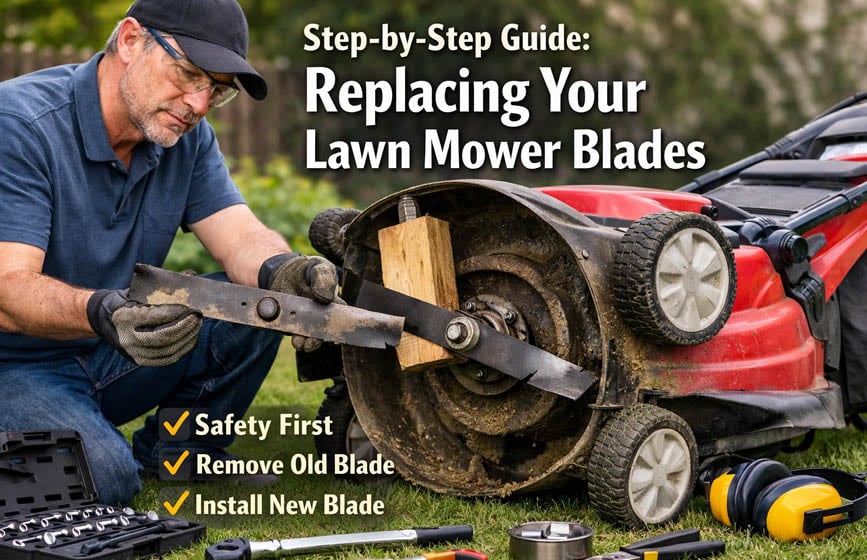
For safety preparation, follow these non-negotiable steps every single time. Disconnect the spark plug wire on a gas-powered mower, this eliminates any possibility of accidental engine starts. For battery-powered mowers, remove the battery pack entirely. If you are working on a riding mower, engage the parking brake and chock the rear wheels. Never rely on your foot or a piece of soft material to hold the blade while loosening the bolt; use a block of wood wedged between the blade and the deck to prevent rotation. These precautions take only a few minutes but make the difference between a routine task and a trip to the emergency room.
This level of attention to detail is the same mindset professionals apply across many home service categories. Just as a trained technician performing air duct cleaning South Jordan homeowners rely on follows strict protocols before servicing equipment, lawn mower blade replacement demands methodical preparation before any tools come out.
|
| Section 3: Removing the Old Blades Step by Step |
With your safety precautions in place and your tools ready, you can now begin the actual removal process. This section covers walk-behind mowers primarily, with notes for riding mower owners where the process differs.
Step 1: Position the mower safely. For walk-behind mowers, tip the mower on its side, making sure the carburetor and air filter face upward to prevent oil from flooding those components. Place a drip pan underneath to catch any fuel or oil that may seep out. For riding mowers, use a mower lift or sturdy jack stands to raise the front of the deck.
Step 2: Photograph the blade orientation. Before removing anything, take a clear photo of how the blade is positioned. Note which side faces down (toward the ground) and which faces up toward the deck. Installing a blade upside down is one of the most common mistakes beginners make, and it results in the mower pushing air down rather than creating the suction lift needed for an effective cut.
Step 3: Loosen and remove the bolt. Place your wooden block between the blade and the inside of the deck to prevent the blade from spinning. Using your socket wrench, turn the center bolt counterclockwise to loosen it. Note that some mowers use reverse-thread bolts, meaning you turn them clockwise to loosen; check your owner's manual if standard counterclockwise does not work. Keep all hardware in a small container so nothing gets lost.
Step 4: Remove the blade assemblySlide the blade off the spindle. Take note of any washers, spacers, or adapter plates that came off with the blade; these must be reinstalled in the same order.
Step 5: Clean the deck. With the blade removed, this is the perfect opportunity to scrape built-up grass clippings from the underside of the deck using a stiff brush or putty knife. Clumping debris reduces airflow and mowing efficiency significantly.
|
| Section 4: Installing the New Blades Correctly |
Purchasing the correct replacement blade is essential. Using your mower's model number (usually found on a label beneath the seat or on the deck housing), search your manufacturer's website or a reputable parts supplier to find an exact match. Using aftermarket blades is fine as long as they match the original specifications for length, center hole diameter, and blade lift angle.
Step 1: Confirm the blade orientation. Your new blade should have a marking or stamp indicating which side faces down, often labeled "This Side Down" or with a grass symbol. If unmarked, the cutting edges should angle upward toward the deck when installed.
Step 2: Reinstall hardware in order. Slide the blade onto the spindle shaft, followed by any washers or spacers in the exact order you removed them. A misaligned spacer can cause improper blade height and vibration.
Step 3: Hand-tighten the bolt first. Thread the center bolt in by hand to ensure it seats properly without cross-threading. Then use your block of wood again to hold the blade stationary while you tighten with the socket wrench.
Step 4: Torque to specification. This step is where many DIYers shortcut the process, and it is a mistake. An under-torqued blade can loosen during operation and become a serious projectile hazard. An over-torqued bolt can strip the spindle threads or warp the blade hub. Consult your owner's manual for the recommended torque value; most walk-behind mowers fall between 35 and 50 foot-pounds, while riding mowers typically require 70 to 90 foot-pounds.
Step 5: Return the mower to its upright position and reconnect the spark plug wire or reinstall the battery. Give the blade a brief manual spin by hand (with gloves on) to confirm it moves freely without wobbling or catching.
|
| Conclusion: Commit to Regular Blade Maintenance for a Healthier Lawn |
Replacing your lawn mower blades is one of those maintenance tasks that pays dividends far beyond the hour or so it takes to complete. Clean, sharp blades cut grass efficiently, reduce strain on the mower engine, improve fuel efficiency, and produce a healthier, more uniform lawn. Grass that is cut cleanly rather than torn heals faster, stays greener longer, and is far more resistant to the fungal diseases and stress that plague poorly maintained yards.
Make blade inspection a standing appointment at the start of every mowing season and after any collision with a hard object. Keep a spare set of blades on hand so you can swap them quickly rather than delaying mowing while you wait for parts to arrive.
|