ProParts Direct

Why Your Mower Won't Start: 7 Common Culprits and Fixes

“Close-up
There's nothing quite as frustrating as gearing up to tackle an overgrown lawn, only to pull the cord (or turn the key) and get nothing but silence. A mower that refuses to start can turn a simple Saturday chore into an hours-long headache. The good news is that most starting problems come down to a short list of usual suspects, and many of them can be fixed in under thirty minutes with tools you probably already own.

Before you call a repair shop or start shopping for a replacement, it's worth working through the most common causes systematically. In this guide, we'll walk through the seven culprits most likely to be behind your mower troubles, along with practical fixes for each one. By the end, you should have a clear path forward, whether that means a quick at-home repair or a better sense of when professional help is warranted.
1. Old or Contaminated Fuel
Gasoline doesn't last forever. Left sitting in a tank or fuel line for more than a month or two, it starts to break down, losing the volatile compounds that make it ignite properly. Ethanol-blended fuel is especially prone to this issue, since ethanol attracts moisture from the air and can separate from the gasoline over time. The result is a gummy residue that clogs fuel lines, carburetor jets, and filters.

If your mower sat in the garage all winter without being drained or treated, stale fuel is often the first thing to check. Signs include a sour or varnish-like smell coming from the tank, visible discoloration, or fuel that looks cloudy instead of clear.

The fix: Drain the old fuel into an approved container and dispose of it properly, then refill with fresh gasoline. If the mower has been sitting for an extended period, it's also wise to check the carburetor for gummy deposits, since old fuel can leave residue even after draining. Adding a fuel stabilizer before long-term storage in the future will prevent this problem from recurring.
2. A Dirty or Clogged Air Filter
Your mower's engine needs a steady mix of air and fuel to run. When the air filter becomes clogged with grass clippings, dust, and debris, it restricts airflow, which throws off that balance and can prevent the engine from starting at all. This is one of the most overlooked issues simply because the filter is tucked away and easy to forget about.

A quick visual inspection tells you most of what you need to know. If the filter looks dark, matted, or coated in a thick layer of debris, it's likely due for a replacement or cleaning.

The fix: Foam filters can typically be washed with warm water and mild soap, then left to air dry completely before reinstalling. Paper filters, on the other hand, should be replaced rather than washed, since moisture can damage the paper element and make filtration less effective. As a general rule, check the air filter every 25 hours of use and replace it at least once per mowing season.
3. A Fouled or Worn Spark Plug
The spark plug is responsible for igniting the fuel-air mixture inside the engine. Over time, plugs accumulate carbon deposits, oil residue, or simply wear out from repeated use. A fouled spark plug either produces a weak spark or no spark at all, which means the engine cranks but never actually fires up.

You can usually tell a spark plug is the problem by removing it and inspecting the tip. A healthy plug shows a light tan or gray color. A plug covered in black soot, oily residue, or visible corrosion is a strong sign that it needs attention.

The fix: Clean minor fouling with a wire brush and check the gap with a feeler gauge, adjusting it to the manufacturer's specification if needed. However, spark plugs are inexpensive, so if there's any doubt about the plug's condition, replacing it outright is usually the more reliable option. Most mower spark plugs cost only a few dollars and take just a couple of minutes to swap.
4. Carburetor Issues
The carburetor mixes air and fuel in the right proportions before sending it into the engine. It's a small, precise component, and it's also one of the parts most vulnerable to problems from old fuel, dirt, or general wear. A clogged carburetor is one of the leading reasons mowers refuse to start after sitting idle for a season.

Symptoms of carburetor trouble include an engine that starts briefly and then stalls, one that runs rough or surges, or one that won't start no matter how many times you pull the cord.

The fix: In many cases, cleaning the carburetor with a carburetor cleaner spray, focusing on the small jets and passages, resolves the issue. This typically involves removing the carburetor bowl and using a fine wire or cleaning solution to clear any blockages. If the carburetor has been neglected for a long time, a full rebuild kit or replacement may be necessary. This repair is a bit more involved than the others on this list, so if you're not comfortable disassembling small engine parts, this might be the point where a small engine repair technician earns their fee.
5. A Dead or Weak Battery
This one applies mainly to electric-start push mowers and riding mowers, both of which rely on a battery to power the starter motor. If you turn the key and hear only a clicking sound, or nothing at all, a depleted battery is the likely cause. Batteries lose charge naturally over time, especially if the mower has been stored for months without use, and extreme cold or heat can accelerate that drain.

Corrosion on the battery terminals is another common issue that mimics a dead battery, since it interrupts the electrical connection even when the battery itself still holds a charge.

The fix: Clean any corrosion off the terminals with a mixture of baking soda and water, then use a multimeter to test the battery's voltage. If it reads significantly below the rated voltage, a full charge with a compatible charger may bring it back to life. If the battery won't hold a charge after that, it's likely reached the end of its lifespan and needs replacing, typically every two to three years depending on usage and storage conditions.
6. Loose or Damaged Wiring and Safety Switches
Modern mowers come equipped with safety switches designed to prevent the engine from running under unsafe conditions, such as when the blade is engaged or the operator isn't seated on a riding mower. While these features are important for safety, they can also be a source of starting problems if a switch becomes misaligned, damaged, or a wire connecting it becomes loose or corroded.

If your mower's engine won't even attempt to crank, and you've already ruled out the battery, checking these safety mechanisms is a smart next step.

The fix: Consult your owner's manual to locate the safety switches specific to your mower model, since these vary between brands and mower types. Check for visible wire damage, loose connectors, or a switch that doesn't click properly when engaged. Many of these switches can be tested with a multimeter for continuity, and replacements are generally affordable and straightforward to install.
7. A Flooded Engine
Ironically, one of the most common starting issues comes from trying too hard to start the mower. Repeatedly pulling the cord or engaging the choke incorrectly can flood the engine with excess fuel, which prevents ignition entirely. You'll often notice a strong gasoline smell if this is the problem.

The fix: Remove the spark plug and let the engine sit for about fifteen minutes to allow excess fuel to evaporate. Pull the cord a few times with the spark plug removed and the choke off to clear residual fuel from the cylinder, then reinstall the spark plug and try starting again with proper technique: choke on for a cold start, then off once the engine catches.
Wrapping Up and Keeping Things Running
Most mower starting problems trace back to fuel, airflow, ignition, or power delivery, and working through this list in order often narrows things down quickly. Fresh fuel, a clean air filter, and a healthy spark plug solve the majority of cases, while carburetor cleaning and battery checks handle most of what's left. Just like other seasonal home maintenance tasks people tend to put off, such as air duct cleaning west valley city homeowners often schedule before allergy season, a little proactive mower care goes a long way toward avoiding bigger headaches later.

If you've worked through all seven of these fixes and your mower still won't cooperate, it may be time to bring in a professional. Persistent starting issues can sometimes point to deeper mechanical problems, like a damaged flywheel key or internal engine wear, that go beyond routine maintenance.

Kohler vs. Kawasaki: Choosing the Right Small Engine for Your Mower

“Close-up
If you have ever shopped for a new zero-turn mower or replaced a worn-out engine on your riding mower, you have probably run into two familiar names on the spec sheet: Kohler and Kawasaki. Both companies have built strong reputations in the small engine world, powering everything from residential riding mowers to heavy-duty commercial zero-turns. But when it comes down to choosing one over the other, the decision is not always straightforward.

This guide breaks down the differences between Kohler and Kawasaki small engines so you can make an informed choice based on your mowing needs, budget, and long-term maintenance expectations. Whether you are a homeowner mowing a half-acre lot or a landscaping professional running equipment eight hours a day, understanding these two engine brands will help you get more value out of your next mower purchase.
A Quick Look at Both Brands
Kohler has been manufacturing engines since 1920, and its small engine division has become a staple in the outdoor power equipment industry. Kohler engines are known for smooth operation, a wide range of horsepower options, and a strong presence in both residential and commercial mower lines. You will find Kohler engines under the hood of many popular mower brands, often praised for their fuel efficiency and relatively quiet operation.

Kawasaki, better known globally for motorcycles and personal watercraft, also has a long history in small engine manufacturing through its Kawasaki Engines division. Kawasaki built its reputation primarily in the commercial landscaping sector, where durability under constant, heavy use matters more than anything else. Their engines are frequently found in professional-grade zero-turn mowers used by lawn care companies and municipalities.

Both brands source their engines to major mower manufacturers like Exmark, Toro, Hustler, and Scag, so it is common to see the same mower model offered with either a Kohler or Kawasaki engine option. This makes the comparison especially relevant for buyers trying to choose between two otherwise identical machines.
Performance and Power Output
When comparing performance, both Kohler and Kawasaki produce engines that range from around 18 horsepower up to 35 horsepower or more for larger commercial units. The real differences show up in how that power is delivered and sustained over time.

Kawasaki engines are often described as having a slightly more aggressive power delivery, which professional mowers appreciate when tackling thick, overgrown grass or working on inclines. Many landscaping contractors report that Kawasaki engines maintain consistent RPM under heavy load better than some competing brands, which translates to a cleaner cut even in tough conditions.

Kohler engines, on the other hand, tend to emphasize smoothness and torque delivery at lower RPMs. This can be beneficial for homeowners who want a mower that feels less jarring to operate and produces less vibration during long mowing sessions. Kohler's Command PRO series, in particular, has built a strong following among users who prioritize a comfortable, steady mowing experience over raw aggressive power.

Fuel efficiency is another factor worth considering. Kohler engines have generally been recognized for slightly better fuel economy in comparable horsepower classes, though the gap has narrowed significantly in recent years as both companies have improved their engine technology. If you are mowing large properties regularly, even a small difference in fuel consumption can add up over a season.
Durability, Maintenance, and Longevity
This is where the debate between Kohler and Kawasaki really heats up among mower owners and repair technicians. Kawasaki has traditionally been viewed as the more rugged, commercial-grade option. Their engines are often praised for their heavy-duty cast iron cylinder sleeves and robust internal components designed to withstand thousands of hours of continuous operation. This is a major reason why so many commercial landscaping fleets lean toward Kawasaki-powered mowers.

Kohler has worked hard to close this durability gap, and modern Kohler Command PRO and Confidant series engines are built with commercial use in mind as well. Kohler has also introduced features like electronic fuel injection on many of its higher-end models, which can improve starting reliability in cold weather and reduce the guesswork involved in carburetor tuning.

Maintenance accessibility is another consideration. Kohler engines are widely regarded as having excellent parts availability and a broad network of authorized service dealers, which can make repairs faster and less expensive. Kawasaki parts and service networks are strong as well, particularly in areas with a heavy concentration of commercial landscaping businesses, but availability can vary more by region compared to Kohler's broader distribution.

Routine maintenance, oil changes, air filter replacement, and spark plug service are relatively similar in cost and complexity between the two brands. Neither engine is dramatically harder to maintain than the other, so this factor should not be the deciding one for most buyers. That said, just as a home benefits from consistent upkeep of unseen systems, the same logic applies outside the garage. Homeowners who invest in regular maintenance elsewhere, such as scheduling air duct cleaning south Jordan services to keep their home's air systems running efficiently, tend to apply that same preventative mindset to their mower engine care, and it pays off in engine longevity.
Price, Availability, and Which One Fits Your Needs
Price differences between Kohler and Kawasaki engines are generally modest when comparing similar horsepower and feature sets. In many cases, the mower manufacturer sets the final price based on which engine is installed, and the gap between a Kohler-equipped model and a Kawasaki-equipped model of the same mower might only be a few hundred dollars, if that.

For homeowners mowing a residential lot on weekends, either brand will likely serve you well for many years. Kohler's smoother operation and strong dealer network make it an easy recommendation for someone who wants reliable performance without needing commercial-grade toughness. Kohler engines also tend to be slightly quieter, which some homeowners appreciate if they are mowing near neighbors or during early morning hours.

For commercial landscapers, property maintenance crews, or anyone running a mower for hours every single day, Kawasaki's reputation for heavy-duty durability often makes it the preferred choice. The slightly higher upfront investment in a Kawasaki-powered machine can pay off in reduced downtime and fewer major repairs over years of demanding use.

It is also worth checking what your local dealer network supports best. If Kawasaki-authorized service centers are scarce in your area but Kohler dealers are everywhere, that convenience factor might tip the scale even if the engine specs are nearly identical. The best engine on paper is not always the best engine for you if getting it serviced becomes a hassle.

Consider your typical mowing conditions as well. If you regularly deal with thick, tall grass, wet conditions, or hilly terrain, Kawasaki's power delivery under load may give you a slight edge. If your lawn is relatively flat and well-maintained, Kohler's smoother, more efficient operation could be the more practical and comfortable choice for regular use.
Making the Final Decision
There is no universally correct answer when it comes to Kohler versus Kawasaki, because the right choice depends heavily on how and where you use your mower. Both brands have decades of engineering experience, strong reputations in the industry, and proven track records powering everything from backyard lawns to commercial job sites.

Before making your final decision, take time to test drive mowers with both engine options if possible. Pay attention to how the engine sounds, how it responds to changes in throttle, and how comfortable it feels during operation. Talk to other mower owners in your area, and do not hesitate to ask your local dealer about which engine tends to need fewer repairs on the specific mower model you are considering.

Ultimately, whether you choose Kohler for its smooth, efficient performance or Kawasaki for its rugged commercial durability, investing in regular maintenance will be the biggest factor in how long your engine lasts. Change the oil on schedule, keep the air filter clean, and address small issues before they become expensive ones.

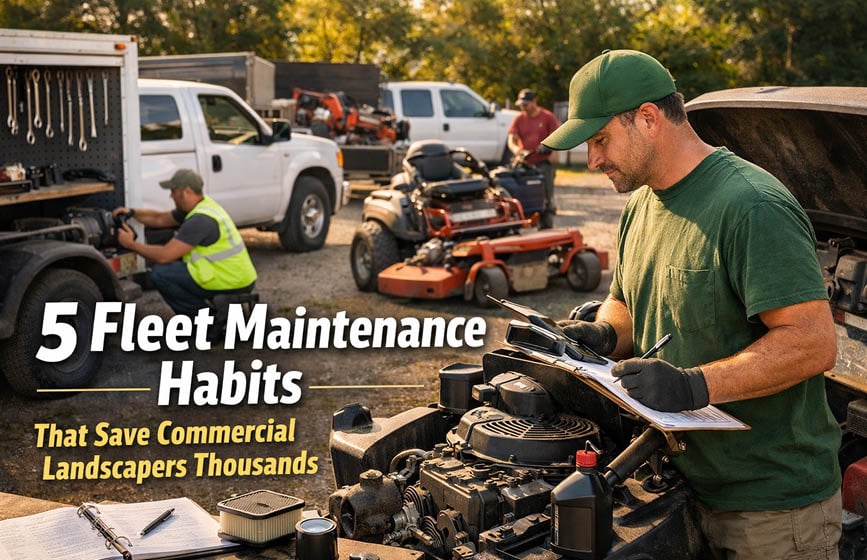
5 Fleet Maintenance Habits That Save Commercial Landscapers Thousands

“5 Fleet Maintenance Habits
Introduction: The Hidden Cost of Neglected Equipment
Running a commercial landscaping business is rewarding work, but it comes with a financial reality that can quietly drain your profits if you are not paying attention. Equipment breakdowns, unexpected repairs, and premature vehicle replacements are among the most common reasons landscaping companies struggle to grow, even when their client list is full and their crews are busy.

The good news is that most of these costs are preventable. The difference between a fleet that bleeds money and one that runs efficiently almost always comes down to maintenance habits, not luck. Landscapers who build consistent, proactive maintenance routines into their operations report saving anywhere from $10,000 to $50,000 annually, depending on fleet size. That is not a small number, and it adds up to real growth capital over time.

In this article, we will walk through five fleet maintenance habits that the most profitable commercial landscapers follow religiously. Whether you manage five trucks or fifty, these practices will extend the life of your equipment, reduce your downtime, and protect your bottom line.
Habit 1: Implement a Scheduled Preventive Maintenance Calendar
Reactive maintenance is the enemy of profitability. When you wait for something to break before you fix it, you always pay more, in parts, in labor, in lost time, and in missed jobs. The landscapers who consistently save the most money are the ones who treat maintenance as a scheduled business activity rather than an emergency response.

A preventive maintenance calendar should cover every piece of equipment in your fleet, from your largest commercial mowers to your utility trucks and trailers. At minimum, this calendar should include oil changes, filter replacements, belt inspections, blade sharpening, tire rotations, and fluid top-offs at manufacturer-recommended intervals.

The key is consistency. Assigning one person or a small team to own the calendar creates accountability. Many successful landscaping companies use simple fleet management software, or even a shared spreadsheet, to track service dates, mileage, and upcoming maintenance needs for each piece of equipment.

The financial impact of this habit is substantial. A small engine that receives regular oil changes can last 1,500 to 2,000 hours. The same engine that runs on dirty oil is lucky to reach 800. When you multiply that difference across an entire fleet of mowers, blowers, and trimmers, the savings on replacement costs alone can reach tens of thousands of dollars per season.
Habit 2: Train Operators to Perform Daily Pre-Use Inspections
Your equipment is only as well-maintained as the people operating it allow it to be. Even with the best preventive maintenance calendar in place, problems can develop between scheduled service dates. Daily operator inspections are the first line of defense against small issues becoming expensive failures.

A good pre-use inspection checklist takes less than five minutes to complete and should cover tire pressure, fluid levels, visible leaks, unusual sounds, belt tension, blade condition, and any warning lights on the dashboard. For trucks and trailers, operators should also check hitch connections, lighting, and brake function.

Operators who are trained to notice and report problems early give your maintenance team the chance to address issues before they escalate. A worn belt caught during a morning check costs $30 to replace. That same belt, left unaddressed until it snaps mid-job, can cause downstream damage to pulleys and spindles that runs into hundreds of dollars, not to mention the cost of pulling a crew off-site.

Beyond the mechanical benefits, daily inspections create a culture of ownership among your operators. When employees feel responsible for the condition of their equipment, they tend to use it more carefully and report issues more promptly. That behavioral shift alone has measurable financial value.
Habit 3: Keep Air Filtration and Engine Intake Systems Clean
Landscaping environments are among the harshest on the planet for engines and air filtration systems. Grass clippings, mulch dust, fine soil particles, and pollen circulate through the air constantly during a working day. Every piece of equipment on your fleet is drawing contaminated air into its engine intake, and if your filtration systems are not cleaned and replaced on a rigorous schedule, you will pay for it in accelerated engine wear and reduced performance.

Air filters on commercial mowers and small engines should be inspected daily and replaced or cleaned weekly during heavy use periods. Trucks and larger vehicles require attention to their air intake systems on a regular basis as well. Companies that operate in dusty, arid regions face an even greater challenge, much like how facilities in dry climates (such as those seeking air duct cleaning salt lake city services) understand that particulate buildup in enclosed systems is a persistent maintenance challenge that demands proactive management rather than reactive repair.

Clogged air filters reduce fuel efficiency, increase engine temperature, and force components to work harder under load. Studies from small engine manufacturers consistently show that running equipment with a dirty air filter can reduce fuel efficiency by 10 to 15 percent and shorten engine life by 20 to 30 percent. On a fleet with 20 mowers burning significant quantities of fuel per season, those numbers translate directly into thousands of dollars of avoidable expense.

Pair your air filtration habit with regular checks of cooling fins and engine shrouds. Landscaping equipment accumulates debris in these areas rapidly, and blocked cooling passages cause overheating, which is one of the leading causes of premature engine failure in the industry.
Habit 4: Maintain a Detailed Maintenance Log for Every Asset
Data is one of the most underused tools in fleet management for small and mid-sized landscaping companies. Many operators rely on memory or informal notes to track service history, which creates gaps and inconsistencies that cost money in the long run.

A detailed maintenance log for every vehicle and piece of equipment in your fleet gives you several powerful advantages. First, it allows you to identify patterns. If a specific mower requires a belt replacement every six weeks instead of every twelve, that is a signal worth investigating. It might indicate an operator technique issue, a misalignment problem, or a component that is not properly sized for the workload. Catching that pattern through a log lets you fix the root cause rather than simply replacing parts on a loop.

Second, detailed logs protect your resale value. A commercial zero-turn mower with a full service history commands a meaningfully higher resale price than an identical machine with no documentation. When you replace fleet assets every three to five years, as most growing landscaping companies do, that difference in resale value adds up quickly across your entire fleet.

Third, maintenance logs help you make smarter decisions about repair versus replace. When you can see that a truck has required $4,000 in repairs over the past 18 months and is approaching a major service milestone, you have the data you need to make a financially sound decision rather than an emotionally driven one.

Modern fleet management apps make logging easy. Even basic tools like Fleetio, Samsara, or a well-organized spreadsheet system can give you the visibility you need to manage costs intelligently.
Habit 5: Establish Vendor Relationships and Negotiate Service Contracts
Independent landscapers often pay full retail rates for parts and repairs simply because they have not taken the time to build relationships with suppliers and service providers. Commercial landscaping companies that operate profitably at scale treat their vendor relationships as a strategic asset.

Start with your equipment dealers. Most dealers offer service contracts or priority scheduling for commercial accounts that commit to using their service department. These contracts often include discounted labor rates, priority parts ordering, and loaner equipment provisions during repairs. When your mower is down during peak season and a competitor is waiting three weeks for service, a preferred vendor relationship can mean the difference between retaining a client and losing one.

Do the same with your parts suppliers. Buying in bulk for consumables like blades, belts, filters, and spark plugs almost always yields discounts of 15 to 25 percent compared to buying as needed. Consolidate your purchasing with one or two trusted suppliers, communicate your expected volume, and ask for a commercial pricing structure. Most suppliers will accommodate the request.

Finally, consider establishing relationships with diesel and fuel suppliers if your fleet is large enough to justify bulk fuel purchasing. Fuel costs represent a significant operating expense for commercial landscapers, and locking in negotiated rates or pre-purchasing at favorable prices during off-peak periods can produce meaningful savings over a full season.
Conclusion: Maintenance Is a Profit Strategy
The most successful commercial landscaping companies do not view fleet maintenance as an expense; they view it as an investment. Every dollar spent on scheduled maintenance, operator training, filtration upkeep, documentation, and vendor relationships returns multiple dollars in avoided repairs, extended equipment life, and reduced downtime.

Building these five habits into your operation does not require a large budget or a dedicated fleet manager. It requires consistency, accountability, and a shift in mindset from reactive to proactive. Start with one habit, build a system around it, and add the others progressively.

The landscapers who master their equipment costs create a durable competitive advantage. They bid more confidently, operate leaner, and reinvest savings into growth rather than burning them on avoidable repairs.

How to Minimize Downtime: Essential Spare Parts Every Landscaper Should Stock

“Minimizing Downtime with Spare Parts
Introduction
In the landscaping business, time is money, and equipment failure does not wait for a convenient moment. Whether you are right in the middle of a commercial property overhaul or wrapping up a residential lawn care schedule, a broken mower belt or a cracked fuel line can bring your entire operation to a grinding halt. The cost of downtime goes far beyond a missed appointment; it affects your reputation, your cash flow, and your client relationships.

The most successful landscaping professionals understand that a well-stocked parts inventory is not an expense; it is an investment in reliability. Just as a savvy homeowner might research services like air duct cleaning Spanish Fork before a seasonal rush to stay ahead of maintenance needs, smart landscapers proactively manage their equipment's health by keeping critical spare parts on hand. This article will walk you through the essential spare parts every landscaper should stock, organized by equipment category, so you can minimize downtime and keep every job running smoothly.
Section 1: Mower Parts That Belong in Every Trailer
Your mowers are the backbone of your landscaping business, and they also carry the highest risk of unexpected failure. Keeping a targeted selection of mower-specific parts on hand means the difference between a five-minute roadside fix and losing an entire day of work.

Drive Belts and Blade Belts

Belts are among the most common failure points on walk-behind and zero-turn mowers alike. They stretch, crack, and snap under heavy use, especially during peak season when equipment rarely gets a rest. Stock at least one or two spare belts that match the models in your fleet. Label them clearly, and replace belts during scheduled maintenance rather than waiting for a break to force the issue.

Mower Blades


Blades dull quickly, especially if your crews are working on properties with sandy soil, rocks near fence lines, or debris-heavy turf. A dull blade tears grass rather than cutting it cleanly, leading to browning and unhealthy turf; a damaged blade can create vibration that wears out spindle bearings prematurely. Keep a full set of replacement blades for each mower model you operate, and build blade sharpening and rotation into your weekly routine.
  
Spindle Bearings and Spindle Assemblies

Spindle bearings are often overlooked until they fail with a loud grinding noise mid-job. A failed spindle brings the entire deck to a halt. Stocking a spare spindle assembly for your most-used machines ensures that what could be a multiday repair becomes a quick swap performed in the field or back at your shop.

Air Filters and Fuel Filters

Clean air and clean fuel are non-negotiable for engine health. Clogged air filters reduce performance and can cause engines to overheat; dirty fuel filters lead to hard starts and power loss. These are inexpensive parts with a significant impact on performance. Keep a generous supply of both for every engine type in your fleet.
Section 2: Small Engine and Handheld Equipment Essentials
Handheld equipment, including trimmers, blowers, edgers, and chainsaws, sees intense daily use and suffers from high vibration, heat exposure, and occasional operator mishandling. These tools might be smaller than your ride-on mowers, but their downtime can significantly slow production on a busy job site.

Spark Plugs

A fouled or worn spark plug is one of the most common causes of hard-starting engines. Fortunately, spark plugs are cheap and easy to replace. Keep a variety of plugs that match your two-stroke and four-stroke equipment. Replace them on a scheduled basis rather than when the engine refuses to start.

Trimmer Line and Spool Heads

Running out of trimmer line mid-job is an avoidable problem that slows crews down more often than it should. Stock bulk trimmer line in the diameter your equipment requires, and keep pre-loaded spare spool heads for each trimmer model. Some crews waste twenty to thirty minutes per day just managing trimmer line; the right inventory strategy eliminates that loss entirely.

Recoil Starters

Recoil starters take a beating over time. Springs break, cords fray, and pawls wear out. A recoil starter failure means a tool that simply will not start, period. For high-use equipment, keep a spare recoil starter assembly on hand. They are relatively affordable and quick to swap in the field with basic tools.

Fuel Lines and Primer Bulbs


Small fuel lines and primer bulbs on two-stroke equipment dry out, crack, and split, especially in heat. These tiny components cause a disproportionate number of no-start issues. A small assortment of fuel line lengths, primer bulbs, and fuel line clamps takes up almost no space but saves tremendous time on the job.
Section 3: Irrigation and Ground Care Equipment Parts
Many landscaping businesses have expanded beyond mowing and trimming into irrigation installation, repair, and seasonal maintenance. Ground care equipment such as aerators, tillers, and sod cutters also presents unique parts challenges. Planning ahead for these systems is just as important as maintaining your cutting equipment.

Irrigation Heads and Fittings

Sprinkler heads get damaged by mowers, foot traffic, and freeze-thaw cycles on a regular basis. Stocking a variety of pop-up heads, rotary heads, and basic PVC fittings means you can address a client's irrigation issue during a routine visit rather than scheduling a follow-up trip. Time saved on callbacks is time you can bill elsewhere.

Valve Solenoids and Pressure Regulators

Valve solenoids are electrical components that fail due to voltage spikes, water intrusion, and general wear. They are affordable, compact, and worth keeping in your service vehicle if you manage irrigation systems for clients. Pressure regulators also wear out over time and affect system performance in ways that are not always obvious until a client notices dry patches or flooding zones.

Aerator Tines and Tiller Tines

If your operation includes lawn aeration or soil tilling, keeping spare tines is essential. Tines wear down quickly in hard or rocky soil and can break entirely on impact with buried debris. A broken tine mid-aeration job leaves you with an incomplete service and a frustrated client. Check tine condition before every use and stock replacements accordingly.

Hydraulic Hoses and Fittings

For larger ground care equipment with hydraulic systems, hose failure can be a sudden and messy problem. While you may not stock every possible hose configuration, keeping a few high-pressure hydraulic hose repair kits on hand allows you to address common failures without a tow to the shop.
Section 4: Organization, Tracking, and Smart Inventory Management
Stocking spare parts only helps if you can find what you need quickly and know when to reorder. An unorganized parts bin is almost as bad as having no inventory at all. Building a simple but consistent inventory system pays dividends in speed and cost control.

Label and Categorize Everything

Use plastic bins or small drawer organizers to separate parts by equipment type or by part category, such as filters, belts, blades, and electrical. Label every bin clearly, and keep a printed parts list on the inside of your trailer door or tool cabinet so crew members can locate items without guessing.

Use a Reorder Threshold System

Set minimum stock levels for your most-used parts. For example, never let your belt inventory drop below two units per mower model, and never let spark plugs fall below a full box. When you pull the last unit from a bin, that triggers an immediate reorder. This simple discipline prevents the situation where a part runs out precisely when you need it most.

Track Your Failure Patterns

Keep a basic log of every repair you make, noting the part, the machine, and the date. Over a season, patterns emerge. If a particular belt fails every six weeks on a specific mower, that tells you to inspect that mower's pulley alignment, not just replace the belt. Data-driven maintenance reduces both parts costs and unplanned downtime significantly.

Establish a Trusted Supplier Relationship

Know your parts suppliers before you need them urgently. Build relationships with local dealers and online suppliers who offer fast shipping. Having a backup supplier for critical components means that even if your primary source is out of stock, you have a plan. Some landscaping businesses negotiate volume discounts with suppliers once they demonstrate consistent purchasing patterns.
Conclusion and Call to Action
Downtime is one of the most controllable costs in the landscaping business, yet it catches many operators off guard season after season. The solution is not complicated; it requires deliberate preparation, a well-stocked parts inventory, and a disciplined maintenance mindset.

Start by auditing your current fleet and identifying the parts that have caused delays over the past year. Then build your inventory from the ground up, starting with the highest-failure components covered in this article. Organize your storage system, establish reorder thresholds, and train your team on where parts are located and how to perform basic field repairs.

The landscapers who consistently win in this industry are not always those with the newest equipment; they are the ones whose crews never have to wait. When your equipment runs, your business grows. Take action this week by reviewing your parts inventory, identifying the gaps, and placing the orders that will keep your entire operation moving forward without interruption.

2015 © ProParts Direct. All Rights Reserved. Privacy Policy | Site Map Design & Development by The Scribbit The Scribbit - Marketing, Graphic Design and Web Development