 |
There's nothing quite as frustrating as gearing up to tackle an overgrown lawn, only to pull the cord (or turn the key) and get nothing but silence. A mower that refuses to start can turn a simple Saturday chore into an hours-long headache. The good news is that most starting problems come down to a short list of usual suspects, and many of them can be fixed in under thirty minutes with tools you probably already own.
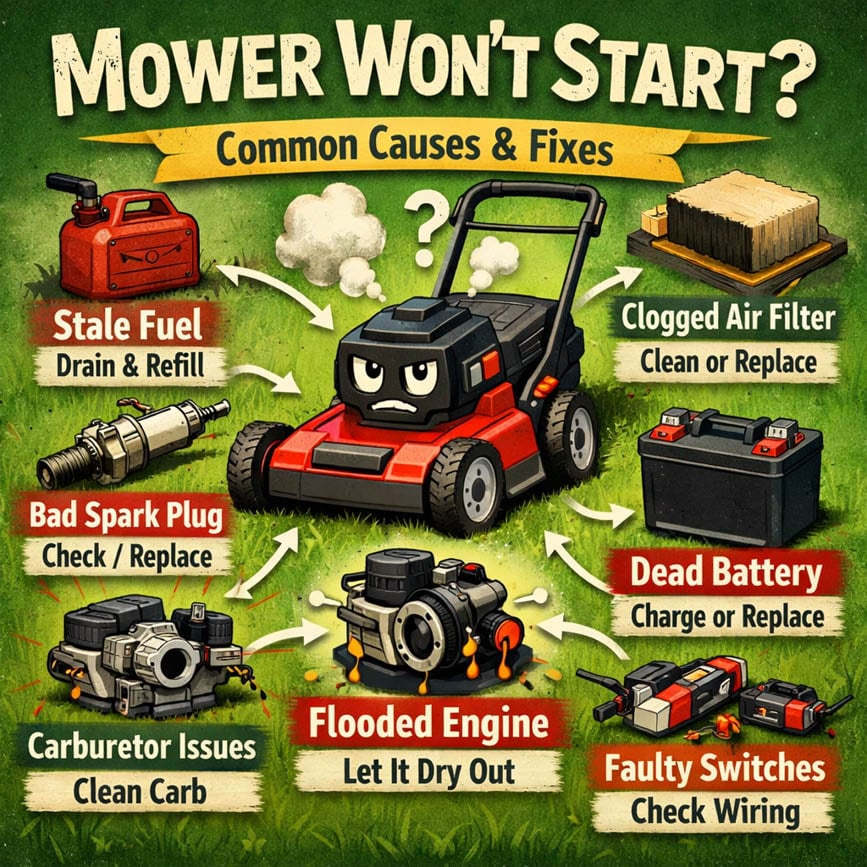
Before you call a repair shop or start shopping for a replacement, it's worth working through the most common causes systematically. In this guide, we'll walk through the seven culprits most likely to be behind your mower troubles, along with practical fixes for each one. By the end, you should have a clear path forward, whether that means a quick at-home repair or a better sense of when professional help is warranted.
|
| 1. Old or Contaminated Fuel |
Gasoline doesn't last forever. Left sitting in a tank or fuel line for more than a month or two, it starts to break down, losing the volatile compounds that make it ignite properly. Ethanol-blended fuel is especially prone to this issue, since ethanol attracts moisture from the air and can separate from the gasoline over time. The result is a gummy residue that clogs fuel lines, carburetor jets, and filters.
If your mower sat in the garage all winter without being drained or treated, stale fuel is often the first thing to check. Signs include a sour or varnish-like smell coming from the tank, visible discoloration, or fuel that looks cloudy instead of clear.
The fix: Drain the old fuel into an approved container and dispose of it properly, then refill with fresh gasoline. If the mower has been sitting for an extended period, it's also wise to check the carburetor for gummy deposits, since old fuel can leave residue even after draining. Adding a fuel stabilizer before long-term storage in the future will prevent this problem from recurring.
|
| 2. A Dirty or Clogged Air Filter |
Your mower's engine needs a steady mix of air and fuel to run. When the air filter becomes clogged with grass clippings, dust, and debris, it restricts airflow, which throws off that balance and can prevent the engine from starting at all. This is one of the most overlooked issues simply because the filter is tucked away and easy to forget about.
A quick visual inspection tells you most of what you need to know. If the filter looks dark, matted, or coated in a thick layer of debris, it's likely due for a replacement or cleaning.
The fix: Foam filters can typically be washed with warm water and mild soap, then left to air dry completely before reinstalling. Paper filters, on the other hand, should be replaced rather than washed, since moisture can damage the paper element and make filtration less effective. As a general rule, check the air filter every 25 hours of use and replace it at least once per mowing season.
|
| 3. A Fouled or Worn Spark Plug |
The spark plug is responsible for igniting the fuel-air mixture inside the engine. Over time, plugs accumulate carbon deposits, oil residue, or simply wear out from repeated use. A fouled spark plug either produces a weak spark or no spark at all, which means the engine cranks but never actually fires up.
You can usually tell a spark plug is the problem by removing it and inspecting the tip. A healthy plug shows a light tan or gray color. A plug covered in black soot, oily residue, or visible corrosion is a strong sign that it needs attention.
The fix: Clean minor fouling with a wire brush and check the gap with a feeler gauge, adjusting it to the manufacturer's specification if needed. However, spark plugs are inexpensive, so if there's any doubt about the plug's condition, replacing it outright is usually the more reliable option. Most mower spark plugs cost only a few dollars and take just a couple of minutes to swap.
|
| 4. Carburetor Issues |
The carburetor mixes air and fuel in the right proportions before sending it into the engine. It's a small, precise component, and it's also one of the parts most vulnerable to problems from old fuel, dirt, or general wear. A clogged carburetor is one of the leading reasons mowers refuse to start after sitting idle for a season.
Symptoms of carburetor trouble include an engine that starts briefly and then stalls, one that runs rough or surges, or one that won't start no matter how many times you pull the cord.
The fix: In many cases, cleaning the carburetor with a carburetor cleaner spray, focusing on the small jets and passages, resolves the issue. This typically involves removing the carburetor bowl and using a fine wire or cleaning solution to clear any blockages. If the carburetor has been neglected for a long time, a full rebuild kit or replacement may be necessary. This repair is a bit more involved than the others on this list, so if you're not comfortable disassembling small engine parts, this might be the point where a small engine repair technician earns their fee.
|
| 5. A Dead or Weak Battery |
This one applies mainly to electric-start push mowers and riding mowers, both of which rely on a battery to power the starter motor. If you turn the key and hear only a clicking sound, or nothing at all, a depleted battery is the likely cause. Batteries lose charge naturally over time, especially if the mower has been stored for months without use, and extreme cold or heat can accelerate that drain.
Corrosion on the battery terminals is another common issue that mimics a dead battery, since it interrupts the electrical connection even when the battery itself still holds a charge.
The fix: Clean any corrosion off the terminals with a mixture of baking soda and water, then use a multimeter to test the battery's voltage. If it reads significantly below the rated voltage, a full charge with a compatible charger may bring it back to life. If the battery won't hold a charge after that, it's likely reached the end of its lifespan and needs replacing, typically every two to three years depending on usage and storage conditions.
|
| 6. Loose or Damaged Wiring and Safety Switches |
Modern mowers come equipped with safety switches designed to prevent the engine from running under unsafe conditions, such as when the blade is engaged or the operator isn't seated on a riding mower. While these features are important for safety, they can also be a source of starting problems if a switch becomes misaligned, damaged, or a wire connecting it becomes loose or corroded.
If your mower's engine won't even attempt to crank, and you've already ruled out the battery, checking these safety mechanisms is a smart next step.
The fix: Consult your owner's manual to locate the safety switches specific to your mower model, since these vary between brands and mower types. Check for visible wire damage, loose connectors, or a switch that doesn't click properly when engaged. Many of these switches can be tested with a multimeter for continuity, and replacements are generally affordable and straightforward to install.
|
| 7. A Flooded Engine |
Ironically, one of the most common starting issues comes from trying too hard to start the mower. Repeatedly pulling the cord or engaging the choke incorrectly can flood the engine with excess fuel, which prevents ignition entirely. You'll often notice a strong gasoline smell if this is the problem.
The fix: Remove the spark plug and let the engine sit for about fifteen minutes to allow excess fuel to evaporate. Pull the cord a few times with the spark plug removed and the choke off to clear residual fuel from the cylinder, then reinstall the spark plug and try starting again with proper technique: choke on for a cold start, then off once the engine catches.
|
| Wrapping Up and Keeping Things Running |
Most mower starting problems trace back to fuel, airflow, ignition, or power delivery, and working through this list in order often narrows things down quickly. Fresh fuel, a clean air filter, and a healthy spark plug solve the majority of cases, while carburetor cleaning and battery checks handle most of what's left. Just like other seasonal home maintenance tasks people tend to put off, such as air duct cleaning west valley city homeowners often schedule before allergy season, a little proactive mower care goes a long way toward avoiding bigger headaches later.
If you've worked through all seven of these fixes and your mower still won't cooperate, it may be time to bring in a professional. Persistent starting issues can sometimes point to deeper mechanical problems, like a damaged flywheel key or internal engine wear, that go beyond routine maintenance.
|