 |
| 30 seconds summary |
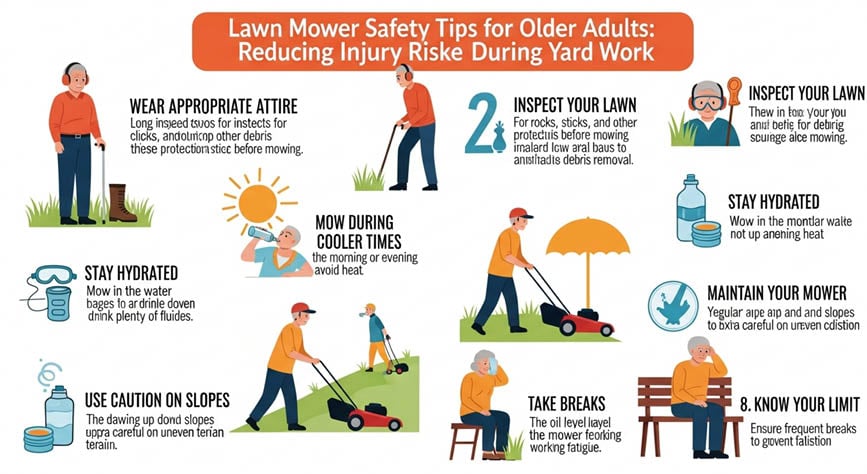
- Lawn maintenance for older adults requires a safety-first mindset to account for changes in balance and physical endurance. Start with proper gear, sturdy boots, eye protection, and ear defense and always clear the yard of debris before starting.
- Prioritize fall prevention by mowing only when the grass is dry and using the correct directional patterns: across slopes for push mowers and up-and-down for riders.
- Most importantly, never clear a clog with your hands; always turn off the engine and disconnect the spark plug first. When the physical demand becomes too high, consider switching to a lightweight electric or robotic mower to stay safe while staying active.
For many older adults, tending to a lawn isn't just a chore; it’s a source of pride, a way to stay active, and a therapeutic connection to the outdoors. However, as we age, the physical demands of yard work intersect with physiological changes like reduced bone density, slower reaction times, and decreased balance.
According to consumer safety databases, thousands of older adults seek emergency room treatment every year for lawn mower-related injuries. These range from minor lacerations to life-altering amputations and cardiac events. By understanding the specific risks and implementing a "safety-first" strategy, you can continue to enjoy your garden while significantly minimizing the danger.
|
| Physical Readiness and Personal Protection |
| Safety starts before you even pull the starter cord. Preparing your body and wearing the right gear is your first line of defense. |
Dress for the Job
- Footwear: Never mow in sandals, flip-flops, or canvas sneakers. Wear sturdy, closed-toe shoes with non-slip soles. Steel-toed boots are the gold standard for preventing toe injuries from blades or heavy machinery.
- Eye and Ear Protection: Mowers can kick up rocks at high speeds. Use wraparound safety goggles. Furthermore, gas mowers often exceed 90 decibels; prolonged exposure can accelerate age-related hearing loss. Use earplugs or noise-canceling earmuffs
- Clothing: Wear long pants to protect your legs from flying debris and a snug-fitting shirt. Avoid loose jewelry or dangling drawstrings that could get caught in moving parts.
|
Know Your Limits
Yard work is a cardiovascular workout. If you have a history of heart issues or respiratory problems, consult your doctor before tackling a large lawn in the heat.
- Hydrate: Seniors are more susceptible to heat exhaustion. Drink water before you feel thirsty.
- Stretch: Spend five minutes warming up your back, hamstrings, and shoulders to prevent strains.
|
| Pre-Mow Inspection: Clearing the Path |
| A safe mow begins with a clean slate. Most mower injuries occur when the blade strikes a foreign object and turns it into a projectile. |
The Yard Sweep
Before starting the engine, walk the entire perimeter of your lawn. Look for: |
- Rocks and gravel.
- Twigs and heavy branches.
- Children’s toys or pet bones.
- Hidden wire or irrigation heads.
|
Equipment Check
Check your mower’s condition. Ensure the discharge chute deflector is in place and the grass catcher is securely attached. If your mower has a "dead man’s switch" (the lever that stops the engine when released), test it to ensure it functions instantly. |
| Mastering the Terrain: Fall Prevention and Stability |
| For older adults, the greatest risk in the yard isn't always the blade; it’s the ground itself. Uneven turf, hidden holes, and slippery grass are major hazards. |
The Importance of Fall Prevention
Incorporating fall prevention strategies into your yard routine is critical. A fall while operating a heavy, motorized machine with spinning blades can be catastrophic. |
- Mow when dry: Never mow wet grass. Not only does it clog the machine, but it turns your lawn into a skating rink.
- Identify Holes: Use colorful stakes to mark stump holes or depressions in the yard so you don't stumble or tip the mower.
- Stable Footing: If you find yourself struggling with balance, consider transitioning from a walk-behind mower to a riding mower or a robotic mower to eliminate the need for constant walking on uneven surfaces.
|
Handling Slopes
Slopes are the leading cause of mower tip-overs. |
- Push Mowers: Always mow across the face of a slope. This prevents the mower from rolling back onto your feet if you slip.
- Riding Mowers: Always mow up and down the slope. Mowing across a hill in a tractor increases the risk of a side-overturn. If the slope is steeper than 15 degrees, it’s best to use a string trimmer or plant ground cover instead.
|
| Operational Safety: Keeping Fingers and Toes Safe |
| The blades of a standard lawn mower spin at nearly 200 miles per hour. At that speed, there is no such thing as a "quick touch" to clear a jam. |
The "Golden Rule" of Maintenance
Never reach into the mower deck with your hands or feet, even if the engine is off. |
- Turn off the engine.
- Disconnect the spark plug wire. This prevents the engine from accidentally kick-starting if the blade is rotated by hand.
- Use a stick or a specialized tool to clear grass clippings or debris.
|
| Directional Safety |
- Avoid Reverse: Try to plan your path to minimize mowing in reverse. If you must back up, look down and behind you first to ensure no pets, grandkids, or tripping hazards have moved into your path.
- Stay Alert: Avoid using headphones for music. You need to be able to hear changes in the engine's pitch or the sound of someone calling out to you.
|
| Fueling and Fire Safety |
|
| Gasoline is highly volatile, and mowers run hot. |
- Cool Down: Never add gasoline to a hot engine. Let the mower cool for at least 10 minutes before refueling to prevent vapors from igniting on the muffler.
- Spill Protocol: If you spill gas, move the mower away from the spot before starting it.
- Storage: Store fuel in UL-approved containers in a well-ventilated area away from living spaces or water heaters.
|
| There is no shame in outsourcing the heavy lifting. If you find that mowing leaves you exhausted for days, dizzy, or in pain, it may be time to hire a local teenager or a professional. This allows you to focus your energy on lower-impact gardening tasks like pruning, planting, or "pottering," which offer the same mental health benefits with a fraction of the risk. |